Autonomous picking alongside your human team. No disruption to current operations.
Pickrook deploys in parallel with your existing pick operations. Robot cells handle the high-frequency B/C SKU tier. Your team handles exceptions, fragile items, and order consolidation. Both operate through your existing WMS.
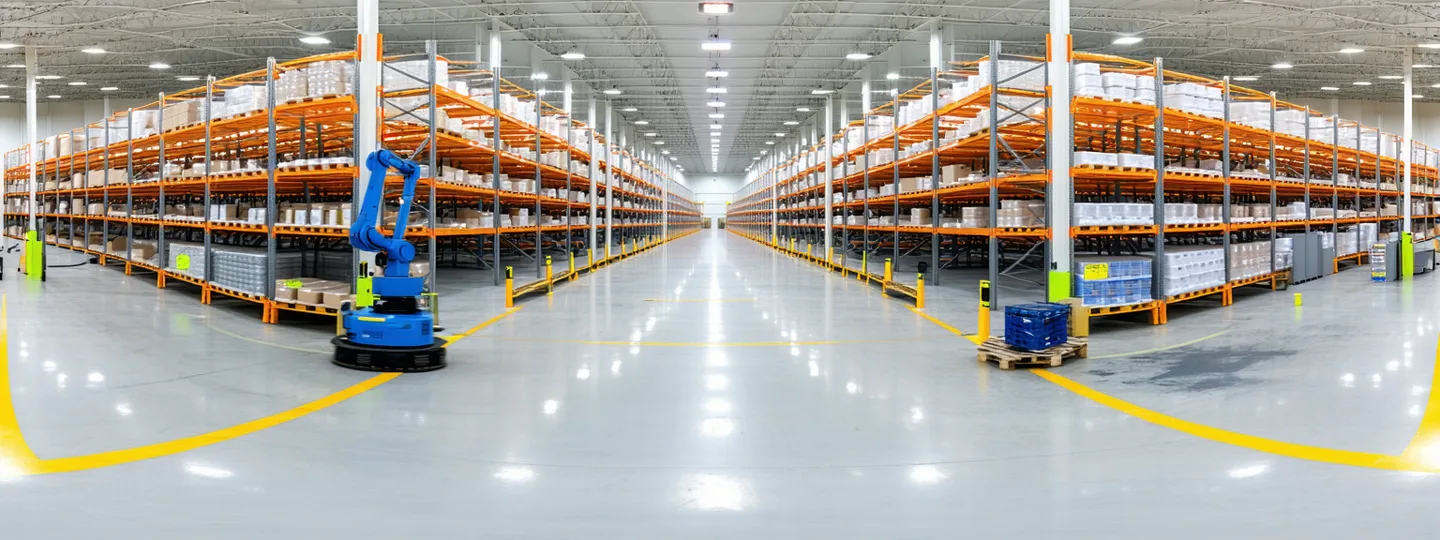
Mixed-case order fulfillment creates a throughput ceiling that headcount can't break.
Fulfillment centers handling diverse SKU catalogs hit a labor efficiency ceiling that can't be solved by adding more pickers.
The order mix problem
A single order might contain a small box, a soft pouch, a large envelope, and a fragile item. Mixed-case fulfillment requires different handling for each line item — and that variability caps picker throughput at roughly 150–200 picks/hr regardless of headcount.
The SKU velocity mismatch
Your top 200 SKUs by velocity are typically box-shaped, consistent-weight, and robot-pickable. They also consume 60–70% of your pick volume. That's the tier Pickrook targets — leaving human pickers for the long tail of irregular, fragile, and oversized items.
Slotting optimization support
Pickrook's vision system collects SKU-level pick data that can be fed into your WMS slotting engine. High-velocity SKUs identified for robot-picking can be re-slotted to pick-optimized bin positions as part of the deployment process.
Throughput without facility modification
Pickrook's 12×16 ft cell footprint deploys in an existing pick zone. No conveyors modified, no pick aisles restructured. Add capacity in a weekend — not a six-month capital project.
What a Pickrook deployment delivers in fulfillment environments.
No shutdown. No construction. No WMS migration.
Pickrook's portable cell design means your existing pick operations continue uninterrupted during installation. The cell is staged, powered, and brought online in a designated zone while the rest of the floor runs normally.
Week 1: site survey and WMS integration build. Week 2: hardware delivery and zone setup. Week 3: vision training and system testing. Week 4: go-live with Pickrook field team on-site.
4-Week Deployment Checklist
- W1 Site survey + SKU velocity audit + WMS API check
- W2 WMS connector build + hardware delivery + zone setup
- W3 Vision training on top SKU profiles + safety cert + end-to-end test
- W4 Go-live: first autonomous pick wave + field team on-site
From operators who have run the deployment.
We've run automated picking tools before. Pickrook is the first one that didn't require us to restructure how our WMS runs wave releases. It just plugged in.
The 4-week timeline was real. We went from site survey to first autonomous pick in 22 days.