Request Pilot
For 3PL Operators

The first pick cell built for multi-client 3PL environments.

Other automation vendors build for single-brand fulfillment. Pickrook is designed from the ground up for operators running 4–12 client SKU profiles under one roof — with per-client wave segregation built in from day one.
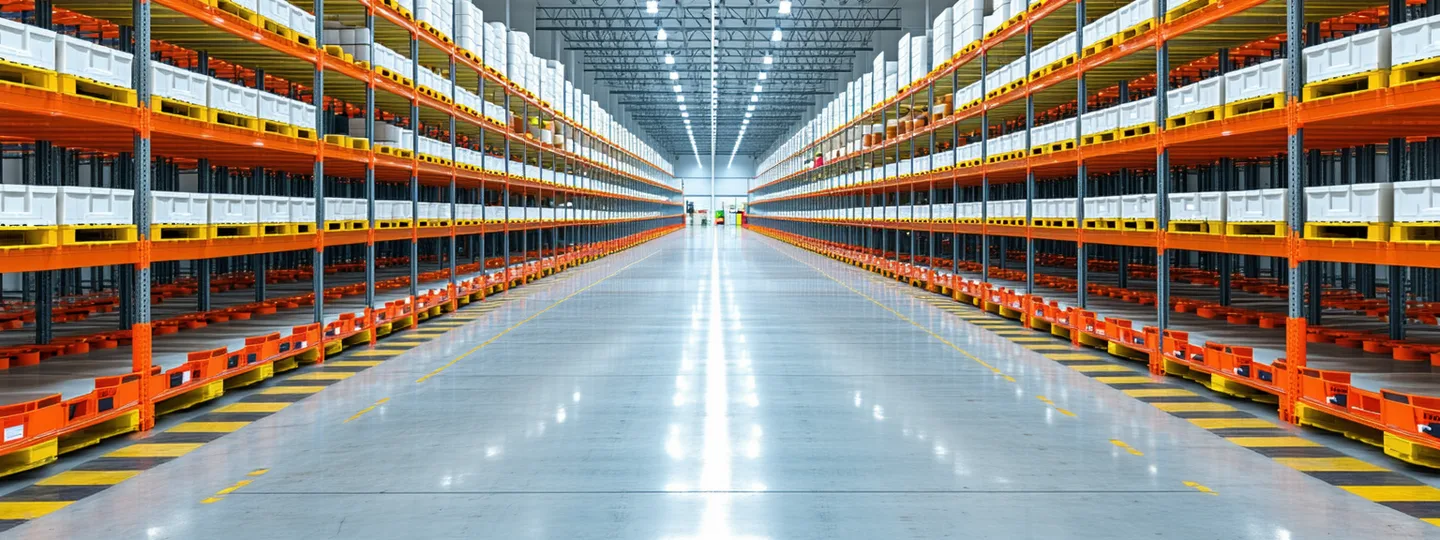
Wide-angle view of a 3PL warehouse pick aisle with multi-client shelf zones and a robotic pick cell in the foreground
The 3PL Labor Problem

High-frequency picks consume 55–70% of picker time. They generate the lowest per-pick margin.

3PL operators running 4–12 client accounts per facility face a structural labor problem that single-brand automation vendors don't understand.

What's happening on your floor

  • ! B/C SKU picks — high-frequency, low-margin, repetitive — are burning out your best pickers
  • ! Headcount scales with client volume, not revenue — labor cost is structural, not variable
  • ! Peak season throughput requires surge headcount that disappears in Q1 — and costs more per hour when you need it
  • ! Existing automation requires per-client WMS configuration changes — infeasible at 4–12 clients

What Pickrook changes

  • ~92% of B/C SKU picks handled autonomously — human pickers focus on exception, fragile, and irregular items
  • Per-client wave segregation built in — each client's picks are isolated at the wave level, not the floor level
  • Peak season throughput scales by adding cells, not headcount — cell add-on time is 2–3 weeks
  • Zero WMS reconfiguration per client — the integration is at the wave level, not the client-config level
Multi-Tenant Architecture

Client segregation at the wave level — not the floor level.

Most automation vendors achieve "multi-client" by physically separating zones. Pickrook enforces client segregation at the wave assignment level — the same cell handles multiple clients sequentially without reconfiguration.

WAVE SLOT SEGREGATION — PER-CLIENT PICK ISOLATION WAVE W1 CLIENT A · 340 picks CLIENT B · 255 CLIENT C · 175 D · 110 WAVE W2 CLIENT A · 410 picks CLIENT B · 310 picks C · 135 WAVE W3 CLIENT A · 380 picks CLIENT B · 220 CLIENT C · 290 picks D · 145 WAVE W4 CLIENT A · 295 picks CLIENT B · 255 CLIENT C · 180 D · 100 Each client's picks are segregated at wave level — accurate SLA reporting per client
Peak Season Scalability

Peak season throughput scales with cells, not headcount.

2–3 week cell add-on

Adding a second or third Pickrook cell to an existing deployment takes 2–3 weeks. Existing WMS integration is reused. New cell shares the same controller and wave assignment logic.

No additional WMS work

Additional cells inherit the existing WMS integration. No new API configuration required. Wave volume is automatically distributed across active cells by the Pickrook controller.

Seasonal cell rental

Early-stage 3PLs with high Q4 variability can access seasonal cell capacity without permanent capital commitment. Reach out to discuss pilot terms that include seasonal capacity options.

Labor Cost ROI

The math behind autonomous picking for 3PL operators.

These are conservative estimates based on industry labor cost data. Your facility's numbers will vary — we'll run the actual calculation with your data in the pilot scoping call.

Illustrative ROI — 200-pick/hr manual vs. Pickrook cell (conservative)

Metric Manual picking Pickrook cell Delta
Throughput (B/C SKUs) ~200 picks/hr ~340 picks/hr +70% throughput
Labor cost per 1,000 picks ~$18–24 (at $16/hr + overhead) ~$8–11 (cell amortized) ~45–55% cost reduction
Peak season surge cost +25–40% (agency rates) +0% (cell capacity is fixed) Eliminates surge premium
Per-client SLA tracking Manual audit required Automated per-wave logs Reduces audit overhead
Pick accuracy (B/C SKUs) ~97–98% (human scanning) ~99.4% Reduced mispick costs
Deployment Results

A Southeast 3PL, 9-client facility, Q4 peak deployment.

220,000 sq ft. 9 active client accounts. Manhattan Active WMS.
Deployed two Pickrook cells in the B/C SKU pick zone four weeks before Q4 peak. No change to existing WMS wave configuration.
30%
reduction in picker headcount during peak
23 days
site survey to first autonomous pick
9 clients
wave-segregated on the same cell cluster
The 4-week timeline was real. We went from site survey to first autonomous pick in 22 days.
VP of Operations at a mid-size Midwest fulfillment center
VP of Operations Mid-size fulfillment center · Midwest