The decision that most directly controls a pick cell's throughput performance isn't made on go-live day. It's made in the week before, when the bin slotting configuration is finalized. Slotting — which SKUs go in which bin locations relative to the robot's reach envelope, pick path, and vision field — is the most consequential pre-deployment decision in a robotic piece-picking implementation. Get it right and the cell hits its throughput target within the first two shifts. Get it wrong and you spend weeks in a tuning loop that your operations team will correctly attribute to poor planning.
This article covers the specific slotting decisions we evaluate in every site survey before a Pickrook deployment.
The Five-Axis SKU Profile
Standard slotting decisions are driven by SKU velocity (A/B/C class) and physical dimensions. For an autonomous pick cell, you need a more granular profile because the robot's constraints differ from a human picker's constraints. We evaluate five axes:
- Velocity class: A, B, C, or D based on 60–90 days of mover analysis. This determines whether the SKU belongs in the forward pick area at all, and whether it's a robot-eligible candidate.
- Pickability score: a composite score on a 0–100 scale based on item size, weight, packaging rigidity, surface texture, and orientation variance. Items scoring below 65 are routed to human pick zones regardless of velocity class. Items above 80 are prime robot candidates.
- Physical dimensions: height, width, depth, and weight. These control which bin type the SKU occupies and where in the rack that bin should be positioned relative to the robot's golden zone (optimal gripper operating height).
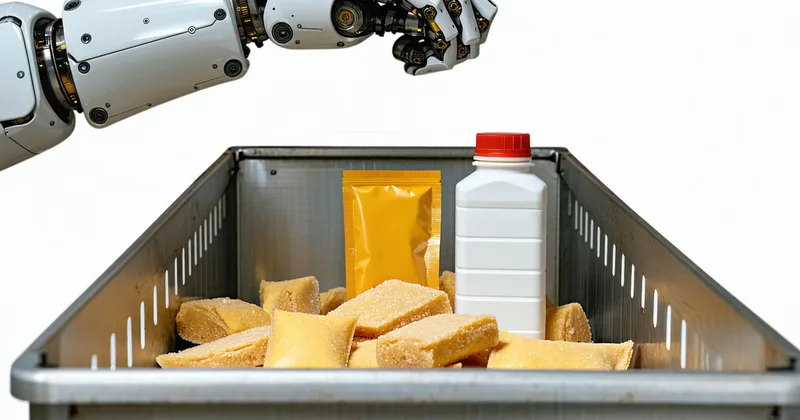
- Orientation variance: how consistently the item presents itself in the bin. Items that stack predictably (e.g., rigid boxes of uniform size) have low orientation variance. Soft goods, irregular shapes, and items that shift in bins after multiple picks have high orientation variance — they require a longer vision cycle and more gripper attempts per pick event.
- Client account: in a multi-tenant 3PL, SKU-to-client mapping must be preserved in the slotting plan. Robot cells that work across client accounts need bin assignments that clearly separate client inventory — not just logically in the WMS, but physically in the pick face layout so that wrong-client picks are physically impossible.
Golden Zone Configuration for Robotic Pick Cells
For human pickers, the golden zone is typically defined as the area between the knees and shoulders — roughly 20 to 58 inches above floor level — where ergonomic pick effort is minimized. For a robotic pick cell, the golden zone is defined differently: it's the height range where the robot's end-of-arm tooling operates at maximum speed and precision, and where the vision system can acquire an accurate SKU identification without requiring a longer-range, lower-confidence image capture.
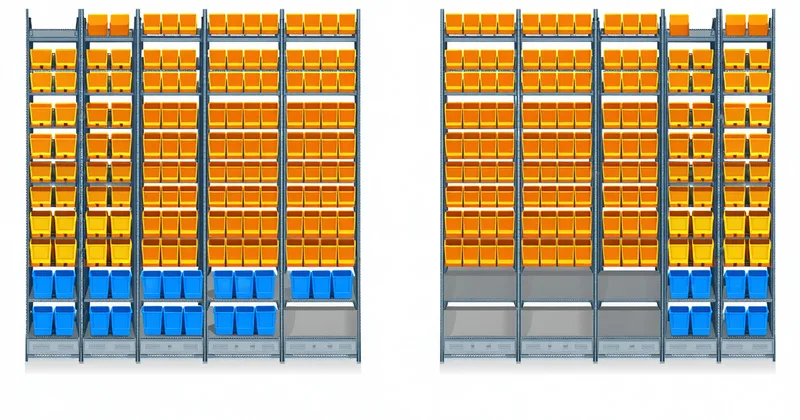
In Pickrook's current pick cell configuration, the optimal pick height range is 18 to 52 inches above floor level for standard rack configurations with 12-inch shelf pitch. SKUs assigned to bins above 52 inches require a slightly longer arm extension and vision recalibration cycle, adding approximately 0.8 seconds per pick event. Over a full shift at 300 picks per hour, that's roughly 40 minutes of accumulated cycle time added if a significant portion of the queue is in the upper bin tier. That's meaningful throughput that goes back to the pick rate when the slotting is optimized for the robot's reach geometry.
The practical guidance: your A-class and high-velocity B-class SKUs should be in the 18–52 inch range in the robot's pick face. C-class items and lower-pickability SKUs that the robot picks infrequently can go above or below that range. This conflicts with traditional human ergonomic slotting rules (humans benefit from the same golden zone for the same physical reasons), but in a robot-primary zone, the robot's geometry should take precedence.
Bin Type Selection by SKU Profile
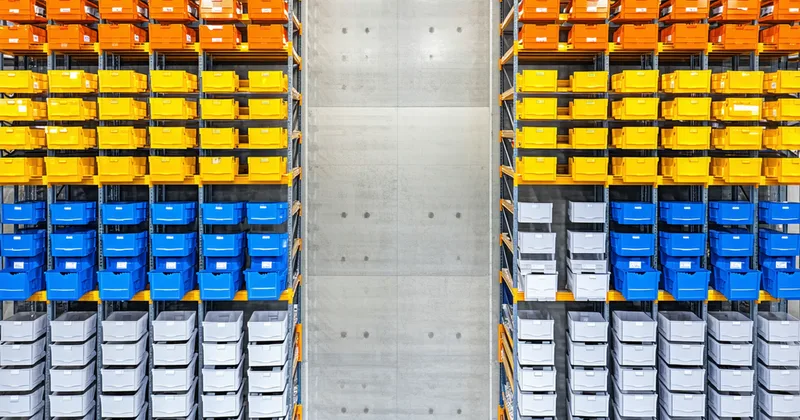
Most fulfillment centers run a mix of standard shelf bins (open-front, polypropylene, in multiple sizes) and flow rack slots for fast-moving cases. The bin type selection for robot-eligible SKUs matters because it affects both vision system performance and gripper reach success rate.
Shallow open-front bins (4–6 inches deep, 12–16 inches wide) work well for a robotic pick cell. The vision system has a clear, unobstructed view of the item, and the gripper has adequate clearance on both sides for approach and withdraw. Deep bins (8+ inches deep) create a vision occlusion problem for items stored at the back of the bin — the camera sees the front face well but struggles to assess items partially obscured by the bin wall. We've seen vision confidence scores drop by 15–20 points for items in deep bins vs. the same SKU in a shallow bin.
Wire-deck shelving that allows items to shift creates orientation variance problems. Fixed-base shelf bins with a slight forward tilt (2–4 degrees) improve item presentation consistency, which improves vision confidence, which reduces the pick retry rate. This is a small detail that has a measurable impact on throughput — it's worth specifying during the site survey and building into the shelving modification plan before go-live.
Replenishment Zone Planning
A pick cell running at 300+ picks per hour will deplete forward pick face inventory faster than a human-pick zone at 80–90 PPH. The replenishment cycle — moving inventory from reserve storage to the forward pick face to keep bins at correct fill levels — needs to be specifically designed for the robot cell's consumption rate.
The most common replenishment failure mode in early pick cell deployments is empty-bin blindness: the robot's vision system recognizes an empty bin and routes the pick event to the exception station, which is the correct behavior, but the exception rate spikes because replenishment hasn't kept pace with the robot's consumption. This looks like a robot performance problem but it's actually a replenishment planning problem.
For a robot cell operating at 300 PPH across a 400-bin pick face, plan for replenishment triggers at 30–40% fill level per bin (not the 10–15% trigger typical of human pick zones). The higher trigger ensures bins are refilled before they reach the pick-failure threshold. In our site surveys, we calculate the expected replenishment labor requirement based on the robot cell's throughput target and the site's reserve storage configuration — this informs how many replenishment associates are needed to support the robot cell's sustained performance.
The One-Week Pre-Deployment Window
We schedule the physical slotting reorganization — moving SKUs to their robot-optimized bin locations — in the week before go-live. That timing is deliberate. Moving SKUs earlier allows client order patterns to shift the velocity rankings in the intervening weeks. Moving them on go-live day creates operational chaos when you're also validating the integration and running operator training.
During the reorganization, every bin location change needs to be mirrored in the WMS location master and in Pickrook's bin-to-SKU mapping configuration. A slotting change that isn't reflected in the WMS creates a phantom inventory problem: the WMS believes the SKU is in location A, the robot's mapping says it's in location B, and pick confirmations start failing. This sounds obvious but it's the most common cause of first-week go-live issues in pick cell deployments — a slotting move that was completed physically but not updated in the WMS.
We're not saying slotting is the only pre-deployment work that matters — we're saying it's the work that most directly determines first-week throughput performance, and it's also the work that's most often rushed or abbreviated when deployment timelines compress. The 4-week timeline we commit to includes a dedicated slotting assessment in week one. If your facility's existing slotting needs significant reorganization before the robot can operate efficiently, that's identified in week one and built into the deployment plan — not discovered at go-live.
If you're planning a pick cell deployment and want to know what your facility's current slotting would require in terms of reorganization before go-live, request a site survey. Marcus's team will walk the pick aisle with you and give you a specific answer.