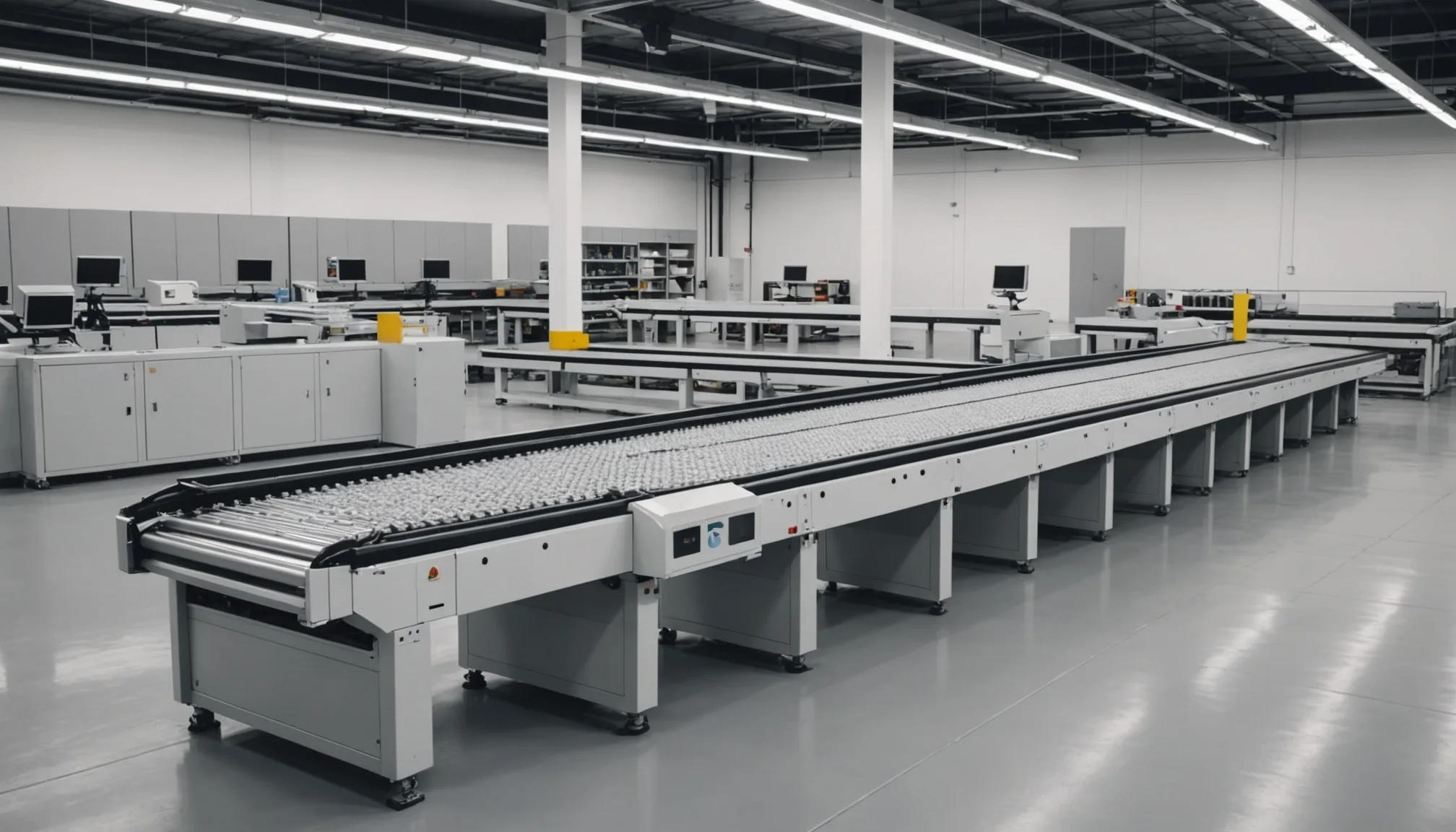
The choice between Locus Robotics-style autonomous mobile robot (AMR) picking and fixed-arm pick stations is one of the most consequential architecture decisions a mid-market 3PL makes when entering automation. Both approaches have track records in commercial deployments. They solve different operational problems. Picking the wrong architecture isn't a disaster you can easily reverse — the capital committed to either approach takes years to recover.
What Each Architecture Actually Does
Locus Robotics and similar AMR platforms are goods-to-robot systems in reverse: the robot travels to the pick location. A human picker or a robotic arm at a stationary station receives a Locus bot that arrives carrying a tote; the picker selects the item from the shelf location the Locus bot directs them to, places it in the bot's tote, and confirms. The intelligence is in the travel optimization — the Locus fleet reduces walking time and pick path inefficiency for human pickers by coordinating where bots go and in what order.
Fixed-arm pick stations are the opposite model: goods come to the arm. Items are stored in a conveyor-fed, AutoStore grid, or carousel-type storage system and delivered to a stationary pick station where a robot arm does the physical selection. The arm doesn't travel — it reaches within its workspace envelope, which is typically 1-2 cubic meters, and picks from bins delivered to it.
These are not competing versions of the same solution. They're different automation architectures suited to different operational profiles.
When AMR Platforms Like Locus Win
AMR platforms are well-suited to operations with large floor footprints, low-to-medium pick density, and significant human picker populations that would benefit from travel reduction. A 300,000 square foot distribution center with 80 human pickers spending 40% of their time walking pick paths is a strong AMR candidate. The Locus fleet reduces that walking time without requiring the operation to change its storage system, pick face configuration, or order management software. The integration lift is relatively low compared to fixed-arm installation.
AMR platforms also handle high SKU variety well because human pickers are still doing the physical selection. Novel items, irregular packaging, items that require judgment about condition or damage — all handled naturally by a human at the pick face. The AMR optimizes the logistics around the human, not the pick decision itself.
When Fixed-Arm Stations Win
Fixed-arm pick stations are better suited to high-density, high-throughput operations where a specific product category constitutes a significant fraction of volume. A 3PL handling e-commerce fulfillment with 2,000 high-velocity SKUs making up 70% of order lines is a stronger fixed-arm candidate than a 3PL with 50,000 SKUs at uniform low velocity.
Fixed-arm stations also make more sense when labor availability is the binding constraint rather than labor cost. In markets where qualified warehouse workers are chronically short supply — parts of the Midwest and Sun Belt have this problem — replacing manual pick actions with robotic arms reduces dependence on the local labor market rather than just optimizing existing labor utilization. That's a different business case and a better justification for the capital intensity of fixed-arm installation.
The Hybrid Deployment Reality
In practice, many mid-market 3PLs that have been at automation for two or more years end up with both. AMR fleets handle the broad catalog of medium-velocity SKUs across the main floor. Fixed-arm stations handle the high-velocity SKU categories where throughput density justifies the investment. The two don't conflict architecturally — they handle different parts of the order profile.
The risk of hybrid architectures is integration complexity. Two separate automation systems, each with their own fleet management software, each posting events to the WMS, each with maintenance schedules and support contracts, multiply the operational management surface. Some 3PLs have found that the throughput gains from the hybrid model are real but the operational burden is underestimated in the business case. Budget for a full-time operations coordinator for the automation layer if you're running both.
Vendor Maturity and Support Footprint
Locus Robotics has a significant installed base in mid-market 3PL facilities in the US, which means the support infrastructure, maintenance response times, and operational best practices documentation are mature. Fixed-arm pick station vendors vary considerably in installed base size — some have dozens of deployments, some have hundreds. Ask for reference customer contacts in operations of similar size and SKU profile, not just case studies, before making a capital commitment.
Neither architecture dominates the other across all operating conditions. The right choice depends on floor footprint, SKU concentration, labor market conditions, and storage system configuration. The 3PLs that get this decision right are the ones who map their actual operational profile to the architecture strengths before they go to vendor demos, rather than letting the demo determine the question.