The warehouse robotics industry has a latency problem it doesn't always talk about clearly. Most pick system marketing materials lead with compute performance specs — how many frames per second the vision model processes, how many parameters in the neural network. Those numbers are real, but they're not the latency number that matters operationally. The number that matters is end-to-end pick decision latency: from the moment the camera captures the bin state to the moment the arm receives the grasp command. And for that number, cloud compute is the wrong architecture.
The Pick Decision Latency Budget
A robot arm executing a pick cycle has a mechanical rhythm. The arm moves to the home position over the bin, dwells while the vision system identifies grasp candidates, receives the grasp command, executes the grasp, and moves to the drop-off point. That full mechanical cycle for a well-tuned pick station takes 3-6 seconds depending on arm configuration and item type.
The dwell time — how long the arm waits at home position for the vision system to return a grasp command — is the window available for pick decision computation. At typical arm cycle times, a pick decision needs to complete in under 300-500 milliseconds to avoid becoming the bottleneck in the cycle. If the vision system takes 800ms because it's waiting for a cloud API response, the arm dwell time expands accordingly and throughput drops.
This is not a theoretical concern. Cloud round-trip latency from a warehouse facility to the nearest AWS or Azure region is typically 15-35ms under ideal conditions. Under real warehouse network conditions — shared Wi-Fi with interference from metal racking, variable bandwidth during peak shift activity, intermittent packet loss — it's regularly 80-200ms, with occasional spikes well above that. Those spikes are unpredictable and uncontrollable from the facility side.
What Edge Compute Actually Means in This Context
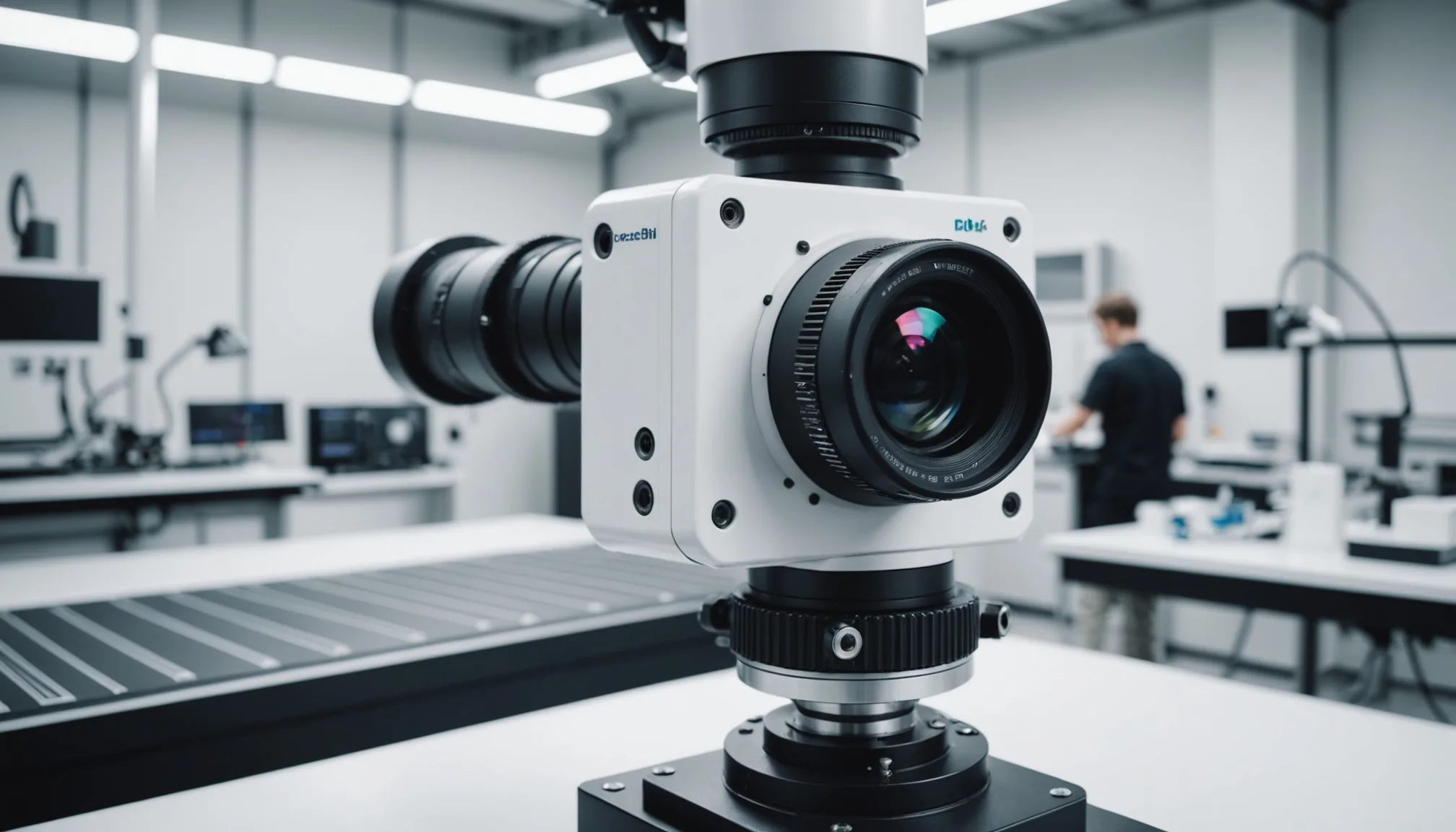
"Edge compute" in warehouse robotics refers to co-locating the inference compute with the arm controller, typically within the pick station enclosure or a rack-mounted compute unit within the same physical station. The camera feeds go to the edge compute unit over a short wired Ethernet run. The inference model runs on that unit. The grasp command goes from the edge unit to the arm controller over the same wired network. No external network hop, no cloud API call, no variable latency.
Modern edge compute hardware — NVIDIA Jetson Orin, Intel NUC with Intel Arc GPU, AMD-based embedded compute modules — provides enough inference throughput to run commercial warehouse pick models at sub-200ms end-to-end latency under production conditions. That's not marginal — it's a design center that delivers consistent pick decision timing across the full shift, regardless of facility Wi-Fi conditions or external network status.
Power Envelope and Thermal Management
Edge compute units co-located with robot arms operate in an industrial environment that creates thermal challenges not present in a data center. Warehouse temperatures range from ambient in general goods facilities to 35-40°F in cold-chain environments. Dust and particulate from cardboard, plastic packaging material, and general warehouse operations accumulate on cooling surfaces.
In our deployments, thermal management of edge compute is a maintenance item that operations teams underestimate. Compute units without adequate cooling run hotter than spec under sustained inference load and thermal-throttle, which is one of the less obvious causes of throughput degradation that doesn't correlate cleanly with pick errors or stalls. Specifying compute units with sealed enclosures and positive-pressure cooling appropriate for the facility's temperature range and dust level is part of the hardware specification process, not an afterthought.
The Bandwidth Reduction Benefit
Beyond latency, edge inference reduces bandwidth demands on the facility network. A pick vision system capturing 30-60 frames per second from two or three cameras per station generates significant raw data volume — on the order of 15-30 Mbps per station in uncompressed form. Transmitting that raw feed to a cloud API for inference at every station in a 10-station deployment would require 150-300 Mbps of committed bandwidth plus adequate headroom for burst. Most warehouse facility networks aren't provisioned for that and shouldn't need to be.
With edge inference, only the structured pick result records leave the station — a few kilobytes per pick event, trivially small on any modern network. The raw camera data stays on the edge unit, processed and discarded. This also has a data privacy implication: raw video of the warehouse interior and its inventory never traverses an external network or lands in a cloud storage bucket, which matters for 3PLs with clients who have contractual restrictions on operational data handling.
Hybrid Architectures: What Cloud Is Good For
Edge-first doesn't mean cloud-free. The right architecture for production pick deployments uses edge compute for inference and command execution — the latency-sensitive path — and cloud or central data infrastructure for analytics, model updates, and fleet monitoring. Pick result records, error event logs, throughput analytics, and arm health telemetry are all well-suited to central aggregation and cloud-based analysis tools. Model updates can be pushed to edge units during maintenance windows without interrupting production.
This hybrid design gives you the latency characteristics of edge inference and the operational visibility of centralized analytics — without trying to run time-sensitive inference over a network that can't guarantee the round-trip time required.
Warehouse pick automation is a real-time control system. Real-time control systems are designed around worst-case latency, not average-case latency. Edge compute exists in this architecture not as a cost optimization or a technical preference — it exists because the physics of arm cycle times and the reality of warehouse network conditions make cloud-only inference architecturally unsuitable for production deployments.